
Launch price: $19 today, normally $38. Instant download after checkout.
The honest field guide to strength after 40

Strong
for Life

Muscle is the organ of longevity — here's how to build and keep it
StrengthPowerBoneBalanceMetabolismIndependence

From your 30s on, you lose muscle and power unless you train — but that decline is mostly disuse, and it is substantially reversible at any age. This is the evidence-based, no-bro-science guide to building strength safely after 40, and keeping it for decades.

$19$38Save 50%

One-time payment · Instant PDF · Yours forever · 60-day money-back guarantee.
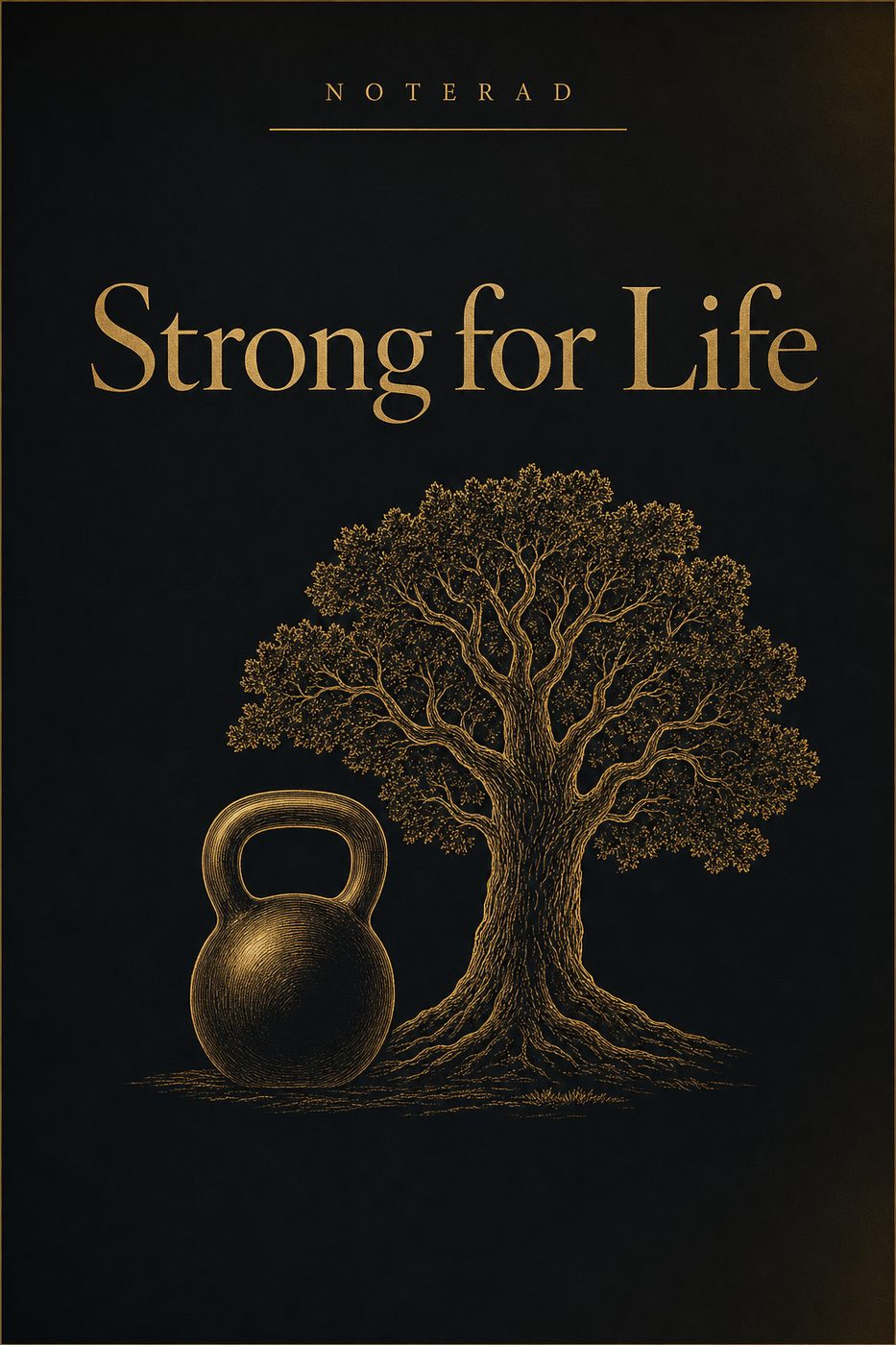
Strong for Life e-book cover
14
parts across 202 pages — the why and the exactly-how, safely
12
week strength program you can start gently this week
WORKS
honest WORKS / IT DEPENDS / MYTH verdicts on the hype

The most important thing most people over 40 aren't doing.

There is a single intervention that helps you stay independent and mobile, protects your bones, balance, and brain, improves your metabolic health, and is strongly linked with living not just longer but better. It's building and keeping muscle. This guide is the honest, practical way to do it — not extreme, not aimed at twenty-year-olds chasing aesthetics, no calorie counts, no fads.

Sarcopenia is the slow thief

From your 30s on you lose muscle, and faster, power — what we mistake for “just getting old.” The main driver is disuse, not age, which means it is largely yours to slow, stop, or reverse.

Muscle is the organ of longevity

It regulates blood sugar and stores resilience for illness and stress. Strength — even grip strength — predicts mortality so well that researchers treat it as a vital sign.

Bones, balance, and falls

Resistance and weight-bearing work builds bone density against osteoporosis, and training strength, power, and balance sharply cuts the risk and the cost of a fall in later life.

It is never too late

People in their 70s, 80s, and beyond build real muscle and strength. After 40 the urgency rises and so do the returns — every year you train is capability banked for later.

A do-it book: the science, the form cues, and the honest verdicts.

1
Understand the whyWhat sarcopenia really is, why muscle is the organ of longevity, and what the research actually shows about strength after 40.
2
Learn how muscle growsStress, recover, adapt — and progressive overload, the one principle that drives every gain in strength, size, and power.
3
Build the foundationsSets and reps demystified, the movement patterns that matter, the equipment you actually need, and how to start without getting hurt.
4
Follow the programA starter full-body session and a complete 12-week program, with form cues and how to progress as the most important habit.
5
Add the other pillarsPower and balance (the 40+ essentials), cardio, mobility, recovery, sleep, and eating to build and preserve muscle.
6
Cut through the hypePlain WORKS / IT DEPENDS / MYTH verdicts on supplements and claims, plus how to adapt training to your age, stage, and conditions.

Fourteen parts, plus a full appendix toolkit.

Built to be read once and used for years. Watch for the verdict badges — WORKS, IT DEPENDS, MYTH — and the DO THIS, FORM CUES, HOW IT WORKS, PROGRESS IT, and TRAIN SAFE tools throughout. Start with the why, run the program, and return to recovery, nutrition, and safety whenever you need them.

Part 1 — Why Strength Is Longevity

What's really at stake after 40
1.1Sarcopenia: the slow thief
1.2Muscle: the organ of longevity
1.3Healthspan, not just lifespan
1.4Bones, balance, and falls
1.5The metabolic and brain dividends
1.6The 40+ urgency — and opportunity

Part 2 — How Muscle Works & Grows

The handful of principles that explain everything
2.1What muscle is, and how it contracts
2.2How muscle grows: stimulus and adaptation
2.3Progressive overload: the one principle
2.4Strength, size, and power — related but different
2.5The ageing muscle: anabolic resistance
2.6Tendons, bones, and connective tissue

Part 3 — The Foundations of Training

The principles and variables you'll adjust
3.1The principles that govern results
3.2The training variables you'll adjust
3.3Sets and reps, demystified
3.4The movement patterns that matter

Part 4 — Your Tools: Equipment & Where to Train

What you actually need to start
4.1The honest truth about equipment
4.2The main tools, compared
4.3Home vs gym
4.4What you actually need to start

Part 5 — Getting Started Safely

Learn the movement before you load it
5.1Warm up (briefly, but do it)
5.2Learn the movement before you load it
5.3How hard, how often, to begin
5.4The minimum effective dose
5.5Soreness, explained
5.6Staying injury-free

Part 6 — The Program: Putting It Together

The shape of a smart, progressing program
6.1The shape of a smart program
6.2A starter full-body session
6.3How to progress (the most important habit)
6.4Weekly structures that work
6.5When and how to change the program

Part 7 — Power, Speed & Balance (the 40+ Essentials)

Train the fibres you lose first
7.1Why power matters more than ever
7.2How to train power safely after 40
7.3Balance: trainable, and worth training

Part 8 — The Other Pillars: Cardio & Mobility

Built around your strength work
8.1Why aerobic fitness belongs in a strength book
8.2How to train your engine (simply)
8.3Can you do strength and cardio together?
8.4Mobility and flexibility

Part 9 — Recovery: Where Strength Is Built

Training is the stimulus; recovery is the growth
9.1Why recovery is non-negotiable
9.2Sleep: the master recovery tool
9.3Rest days, deloads, and listening to your body
9.4Overtraining and active recovery

Part 10 — Eating to Build & Preserve Muscle

Protein first, no crash diets
10.1Protein: the headline nutrient
10.2Eat enough, full stop
10.3Whole foods, carbs, fats, fluids
10.4Nutrition around training

Part 11 — What Actually Works: The Verdicts

Honest calls on supplements and claims
WORKS — Progressive overload & consistency
WORKS — Creatine monohydrate; enough protein
±IT DEPENDS — Protein powder; rep ranges; fasted training
MYTH — “Lifting makes women bulky”
MYTH — “You're too old to build muscle”
MYTH — Spot reduction, cardio kills gains, BCAAs

Part 12 — Strength for Every Body & Stage

The principles, adapted to you
12.1Women and strength
12.2In your 60s, 70s, 80s and beyond
12.3Training with common conditions
12.4Returning after injury, illness, or a layoff

Part 13 — Mindset & Staying Consistent

Identity over motivation, for the lifelong view
13.1Identity over motivation
13.2Make it easy and enjoyable
13.3Progress, plateaus, and patience
13.4The lifelong view

Part 14 — Troubleshooting & FAQ · plus Appendices A–O

The complete reference toolkit
14Troubleshooting & FAQ: plateaus, joints, consistency
AThe Exercise Library (squat, hinge, push, pull, carry)
CThe 12-Week Strength Program
DThe Training Log
OThe 30-Day Strength Kickstart
BGlossary, plate guide, planners & trackers

Everything you need to train, eat, and progress — honestly.

The complete method, why and howFourteen parts that move from the science of sarcopenia and muscle growth to form cues, sensible progression, and lifelong consistency.
A full 12-week program & exercise libraryA starter full-body session, a complete 12-week plan, and key lifts by movement pattern — each with how to scale it easier or harder.
Honest, evidence-based verdictsPlain WORKS / IT DEPENDS / MYTH calls on creatine, protein powder, rep ranges, and the myths that cost people years.
Safety-first, for every stageTRAIN SAFE and SEE A DOCTOR guidance throughout, plus chapters for women, advanced age, common conditions, and returning from injury.

Get the full Strong for Life guide.

All 14 parts across 202 pages
The complete 12-week strength program
The Exercise Library, by movement pattern
Progressive-overload & recovery method
Eating-for-muscle & protein guidance
Honest WORKS / IT DEPENDS / MYTH verdicts
Training log, planners & 30-day kickstart
Lifetime updates, read once, use for years
$19$38

One-time payment · Instant digital access after checkout · PDF, yours forever.

Get the guide — $19 →
60-day money-back guarantee · Instant download · Secure checkout

Clear answers before checkout.

Is this a digital e-book?

Yes. It is a designed PDF you download instantly after checkout and keep forever — readable on phone, tablet, or computer.

I'm over 40 and out of shape — is it for me?

That is exactly who it is written for. It assumes no experience, starts gentler than you think, prizes form over weight, and includes a first-week plan and a 12-week program built around safe, gradual progression at any starting point.

Do I need a gym or special equipment?

No. A full part covers home vs gym and what you actually need to start — you can build very real strength at home with bodyweight, bands, and a little weight, using the exercise library and its easier-and-harder scaling.

Is this medical advice?

No. It is educational content, not a substitute for personalised coaching or your doctor. It carries TRAIN SAFE and SEE A DOCTOR guidance throughout, and tells you plainly to clear a new strength program with a physician first — especially over 40 or with a heart, blood-pressure, joint, bone, or back condition.

Strong for Life is educational content, not medical advice, diagnosis, or treatment, and not a substitute for personalised coaching. Strength training carries risk — clear a new program with your doctor before you begin, especially if you are over 40 or have a heart, blood-pressure, bone, joint, or back condition, are pregnant, or are returning from injury or a long layoff. Form before weight; pain is a stop sign.