
Launch price: $19 today, normally $38. Instant download after checkout.
The honest field guide to better nights

Better Sleep
Starts Tonight

How sleep really works — and how to get more of it
Body ClockSleep CyclesWind-DownTrackingCBT-I8-Week Reset

You don't need to chase a perfect eight hours. You need to understand your sleep, remove what sabotages it, and give your body the conditions it's been waiting for. This guide gives you both halves — the science, so the advice sticks, and the practical tools, routines, and tracking to put it to work tonight.

$19$38Save 50%

One-time payment · Instant PDF · Yours forever · 60-day money-back guarantee.
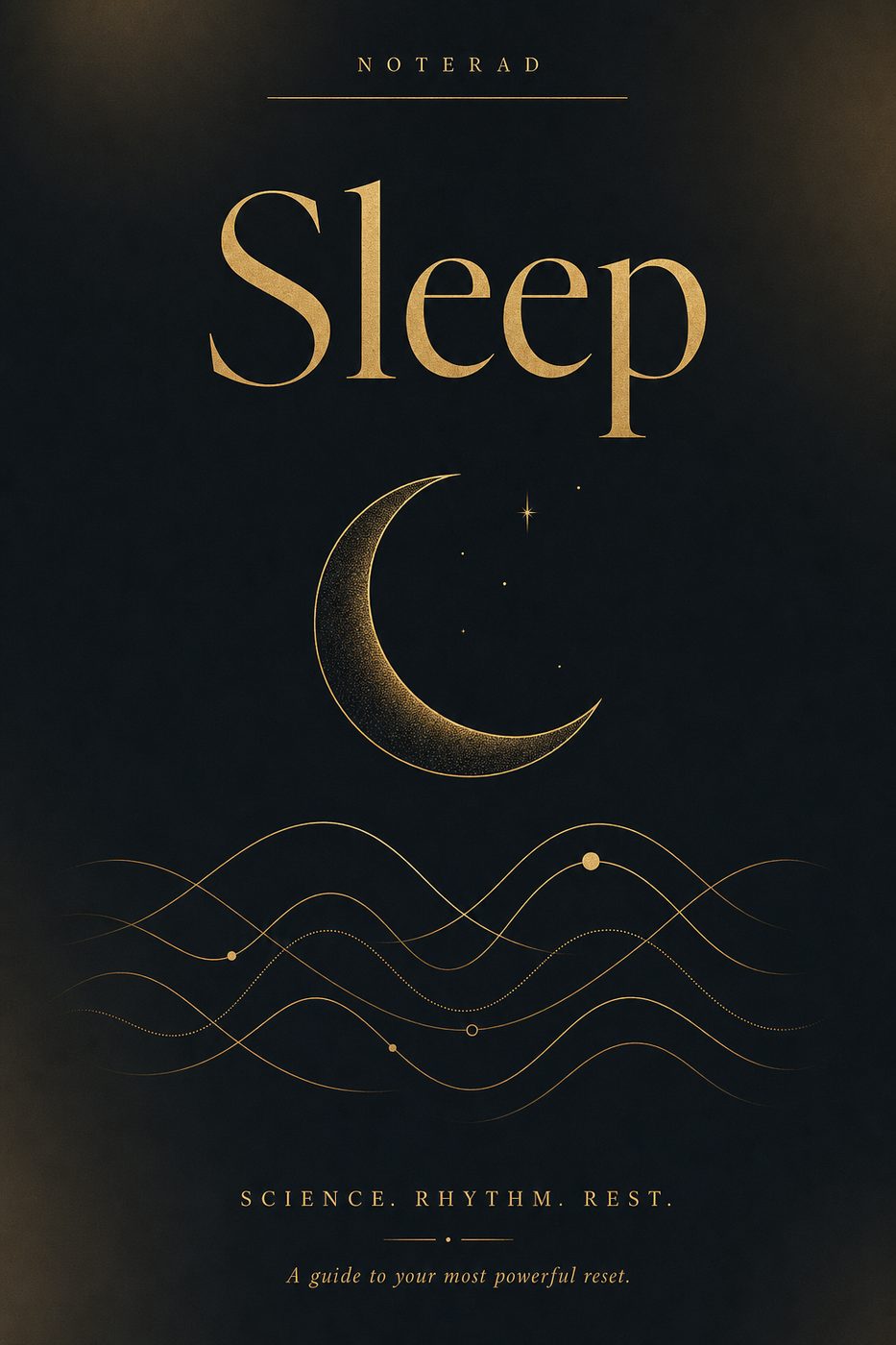
Sleep — The Honest Field Guide e-book cover
12
parts of teaching, from the science of sleep to when it's more than habits
18
appendices — a toolkit, an 8-week reset, and a 56-night sleep journal
201
pages you read once and use for years — honest, evidence-based, no fluff

Sleep isn't downtime. It's your body's nightly maintenance.

We treat diet and exercise as the pillars of health and quietly sacrifice the third — sleep — first, whenever life gets busy. It's the worst trade we make. While you sleep, your brain consolidates memory, clears metabolic waste, regulates emotion, and resets the systems that keep mood, appetite, immunity, and focus working. The good news: sleep is remarkably trainable.

It runs on a few levers

Light, timing, temperature, sleep pressure, and arousal. Once you understand them, you can work with your body instead of against it — rather than chasing random tips.

Your clock sets the timing

A master clock decides when you feel alert or sleepy across 24 hours. A fixed wake time and morning light anchor it — the single most powerful change most people can make.

Trying harder backfires

The harder you chase sleep, the more it runs. Much of stubborn insomnia is arousal and effort itself — which is why the fixes are about conditions and habits, not willpower.

Some of it is medical

Apnoea, restless legs, and circadian disorders won't yield to better habits. This guide tells you honestly which is which — and points you to a doctor when the signs call for it.

A do-it book: theory you'll understand, tools you'll actually use.

I
Start tonightYour First 7 Nights and a baseline you can take in minutes — seven moves that do most of the heavy lifting before the theory deepens.
II
Understand the architectureSleep stages, the ~90-minute cycle, sleep pressure, and the two-process model — so the advice stops feeling like random tips.
III
Reset your body clockLight, melatonin honestly, temperature, chronotypes, and social jetlag — the timing system that everything else depends on.
IV
Build the day and the wind-downCaffeine half-life, the alcohol impostor, movement, the buffer zone, and a screens-down routine that signals sleep is coming.
V
Fall asleep, and get back overStimulus control, quieting the racing mind, paradoxical intention, and what to do at 4am — without training your brain that bed means awake.
VI
Track, troubleshoot, and escalateWhat wearables get right and wrong, CBT-I for real insomnia, sleep across life and shift work, and the disorders that need a doctor.

Twelve parts, then eighteen appendices of tools.

The teaching takes you from the science to the disorders that need professional care. Then the appendices turn it into practice — a one-page toolkit, an 8-week reset, an 8-week sleep diary, a 56-night guided journal, relaxation scripts, and planners you return to for years.

Part 1 — The Science of Sleep

What sleep is, the stages, and the shape of the night
1.1What Sleep Is Actually For
1.2The Stages of Sleep
1.3A Sleep Cycle, and the Shape of the Night
1.4Sleep Pressure and the Two-Process Model
1.5Sleep Debt
1.6Why Dreams Matter
1.7Why You Sleep Badly in a New Place

Part 2 — Your Body Clock

The timing system everything depends on
2.1The Master Clock
2.2Light: The Master Signal
2.3Melatonin, Honestly
2.4Core Body Temperature
2.5Chronotypes: Larks, Owls, and the Rest
2.6Social Jetlag

Part 3 — How Much Sleep You Actually Need

The honest answer, and how to find your number
3.1The Honest Answer
3.2Quality Versus Quantity
3.3How to Find Your Number
3.4Naps: Use Them Well

Part 4 — The Sleep-Friendly Day

What you do by day decides how you sleep at night
4.1Light, Again — Because It Matters Most
4.2Caffeine: Respect the Half-Life
4.3Alcohol: The Great Impostor
4.4Movement
4.5Food and Drink Timing

Part 5 — The Wind-Down

The buffer zone between your day and your night
5.1The Buffer Zone
5.2Screens and the Evening
5.3The Warm Bath Trick
5.4A Wind-Down Menu
5.5The Late-Night Trap: Revenge Bedtime Procrastination

Part 6 — The Bedroom

Dark, cool, quiet — and for sleep
6.1Dark
6.2Cool
6.3Quiet
6.4The Bed Is for Sleep
6.5Mattress, Pillow, Comfort

Part 7 — Falling Asleep, and Getting Back

Because the harder you try, the worse it gets
7.1The Harder You Try, the Worse It Gets
7.2Stimulus Control: The Golden Rule
7.3Quiet the Racing Mind
7.4Paradoxical Intention
7.5Waking in the Night
7.6Early-Morning Waking
7.7The 4am Philosophy Hour

Part 8 — Tracking Your Sleep

Apps, wearables, and sleep-cycle smart alarms
8.1How Sleep Trackers Actually Work
8.2What They're Good At — and Not
8.3Sleep-Cycle Smart Alarms
8.4Orthosomnia: When Tracking Backfires
8.5How to Actually Use the Data
8.6Choosing a Tracker, Honestly

Part 9 — Insomnia & CBT-I

The gold-standard fix for chronic insomnia
9.1What Insomnia Is
9.2The Insomnia Cycle
9.3CBT-I: The Gold Standard
9.4A Note on Sleeping Pills
9.5Sleep Consolidation, Explained Simply

Part 10 — Sleep Across Life & Circumstances

Shift work, jet lag, parenting, aging, and more
10.1Shift Work
10.2Jet Lag
10.3New Parents & Babies
10.4Teenagers
10.5Aging
10.6The Menstrual Cycle, Pregnancy & Menopause

Part 11 — When It's More Than Habits

The disorders that need professional care
11.1Sleep Apnoea
11.2Restless Legs Syndrome
11.3Circadian Rhythm Disorders
11.4Parasomnias
11.5Narcolepsy & Severe Daytime Sleepiness

Part 12 — Troubleshooting & FAQ

Honest answers to the questions that stall progress
“I do everything right and still can't sleep.”
Eighteen appendices: toolkit, glossary, journals & planners

A complete sleep skill — minus the myths and the magic pills.

The science, in plain EnglishStages, the ~90-minute cycle, sleep pressure, and the body clock — so every habit makes sense and actually sticks.
The 8-week sleep resetA structured, do-it-tonight program with a paired 8-week diary and a 56-night guided journal to make the change stick.
Honest, clinician-aware guidanceClear “see a doctor” signposts for apnoea, restless legs, and chronic insomnia — and an honest take on sleeping pills and trackers.
Tools you keep for yearsA one-page toolkit, relaxation scripts, a thought-reframe library, a wind-down menu, and weekly planners you return to.

Get the full Sleep Field Guide.

All 12 parts of evidence-based teaching
18 appendices of tools, journals & planners
Your First 7 Nights quick-start plan
The complete 8-week sleep reset
An 8-week sleep diary you can keep
A 56-night guided sleep journal
CBT-I, the gold standard for insomnia
Honest “see a doctor” signposts throughout
$19$38

One-time payment · Instant digital access after checkout · PDF, yours forever.

Get the guide — $19 →
60-day money-back guarantee · Instant download · Secure checkout

Clear answers before checkout.

Is this a digital e-book?

Yes. It is a designed PDF you download instantly after checkout and keep forever — readable on phone, tablet, or computer. The journals and planners are built right in.

I've tried sleep tips before. Is this just another list?

No. It teaches the science first — the body clock, sleep cycles, and sleep pressure — so the advice makes sense and sticks. Then it hands you a structured 8-week reset, a 56-night journal, and trackable tools, not a scattering of tips.

Will it work if I sit at a desk or work shifts?

Yes. A fixed wake time and morning light anchor your clock no matter your schedule, and there's a dedicated part on shift work, jet lag, parenting, and other real-life circumstances.

Is this medical advice?

No. It is educational content, not diagnosis or treatment. It repeatedly points you to a doctor when the signs call for it — loud snoring or gasping, overwhelming daytime sleepiness, or insomnia most nights for three months or more.

Sleep — The Honest Field Guide is educational content, not medical advice, diagnosis, or treatment. Most sleep problems respond to better habits, but some are driven by genuine medical conditions. See a qualified clinician for chronic insomnia, suspected sleep apnoea, or any suspected sleep disorder, and never start, stop, or change sleep medication except with a doctor.