
16
chapters across six parts — find it, release it, keep it free
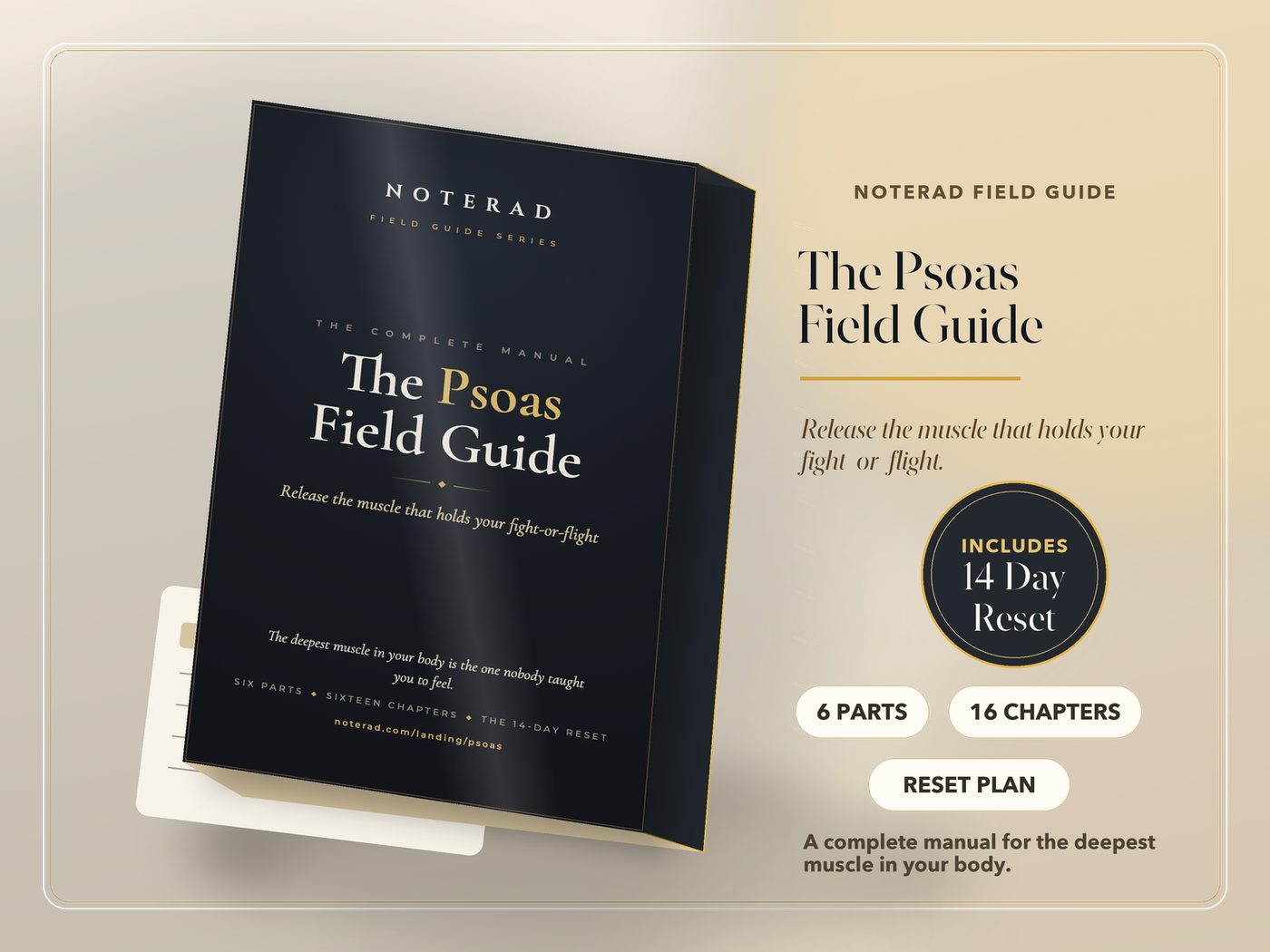
The deepest muscle in your body is the one nobody taught you to feel. Find it in sixty seconds, release it on your living-room floor, and feel your breath settle two inches lower the same day — with an honest, clinician-aware guide to what actually works.
One-time payment · Instant PDF · Yours forever · 60-day money-back guarantee.
The psoas major is the only muscle that joins your spine to your legs. When it is short or braced, it pulls on everything above and below it. Most “psoas stretch” videos teach a hip-flexor stretch that never reaches it. This guide teaches the release, the rest position, and why the breath changes.
From the twelfth thoracic vertebra to the top of the femur, it is the lone bridge from spine to leg. Short or braced, it tilts the pelvis and aches the lower back.
Eight to ten hours a day at ninety degrees and the muscle remodels short. The good news: the same adaptability runs in reverse when you give it room.
The psoas is wired into the fight-or-flight reflex. A nervous system stuck in low-grade threat keeps it gripped — tightness no amount of stretching resolves.
It shares fascia with the diaphragm through the medial arcuate ligament. Release the psoas and the dome can descend — your breath drops lower the same day.
A guide built to be read once and used for years. Start with the foundational chapters, run the protocol, and return to the maintenance and contraindication chapters whenever you need them.
One-time payment · Instant digital access after checkout · PDF, yours forever.
Get the guide — $39 →Yes. It is a designed PDF you download instantly after checkout and keep forever — readable on phone, tablet, or computer.
That is exactly who it is for. Sitting holds the psoas short for hours; the guide is built around small, repeatable resets that undo that pull — including a five-minute desk-life maintenance habit.
No. Most psoas tightness is partly a nervous-system brace, so the foundational technique is a position of rest, not a stretch. The guide explains why stretching an already-protective muscle often makes it worse.
No. It is educational content. There is a full contraindications chapter, and if you are pregnant, have a vascular or spinal condition, or take medication, the guide tells you plainly to clear it with a clinician first.
The Psoas Field Guide is educational content, not medical advice, diagnosis, or treatment. Direct work is contraindicated for some conditions — consult a qualified clinician about your circumstances before changing your routine.
The psoas links your spine to your legs, your breath to your gait, and your nervous system to your posture. It is where the body stores the unfinished fightor-flight response. This is the complete manual for finding it, releasing it, and keeping it free.
The Promise
Find it in sixty seconds. Release it on your living-room floor. Feel your breath settle lower the same day. Most online “psoas stretch” videos teach a hip-flexor stretch that never reaches the psoas at all. This guide teaches something different: the release, the rest position, and the reason your breath changes when the muscle finally lets go. The promise is modest and specific. You can find the psoas in about sixty seconds, release it on your own living-room floor, and feel your breath settle lower the very same day. Five things worth knowing before you begin The psoas major runs from the twelfth thoracic vertebra to the top of the femur, which makes it the only muscle that physically connects the spine to the leg. It is also the deepest muscle in the body, lying so far beneath the abdominal organs that you cannot touch it directly through the abdominal wall without years of training.